Create Value for You
Filter Press

Filter Press

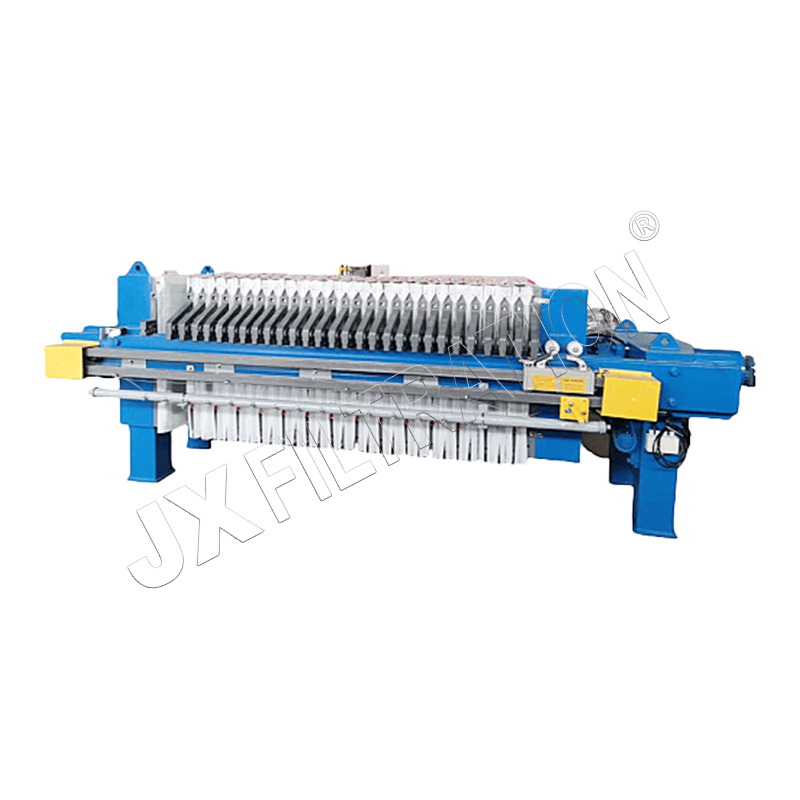
When it comes to achieving the driest possible filter cake and lowest disposal costs, our Filter Presses are engineered to deliver reliable, high-pressure dewatering performance. With a focus on heavy-duty construction, flexible automation, and tailored plate configurations, we offer plate-and-frame, chamber, and membrane filter presses to suit diverse sludge and slurry characteristics.

Share to:LinkedInFacebookX

Our Advantage

If there is a performance issue, we will replace the equipment free of charge
Strictly selected material suppliers to ensure stable quality and competitive pricing
Customize plate size, chamber volume, and automation level to suit specific feed characteristics
Quote, drawings, and detailed technical specifications within 3 minutes
Full-penetration welding on all seams with argon shielding, followed by acid pickling and passivation to prevent weld-adjacent corrosion failures
Perfectly welded and assembled by experienced craftsmen

Description

JX Filtration offers a full range of filter presses from laboratory-scale units with 0.16 m² filtration area to large industrial models exceeding 400 m², with flexible customization options to suit various sludge types and throughput requirements across municipal and industrial wastewater treatment, mining, chemical, food, and pharmaceutical applications—high-pressure, automated, and built for long-term reliability.

A filter press is a batch-operated solid-liquid separation device that uses external pressure—hydraulic or mechanical—to force liquid through filter cloth while retaining solids as a compressed cake. Our portfolio includes plate-and-frame filter presses, chamber filter presses, and diaphragm (membrane) filter presses, each suited to different cake dryness targets and cycle time requirements. The diaphragm filter press represents the next generation of pressure filtration, delivering significantly drier cake and shorter cycle times than conventional designs.
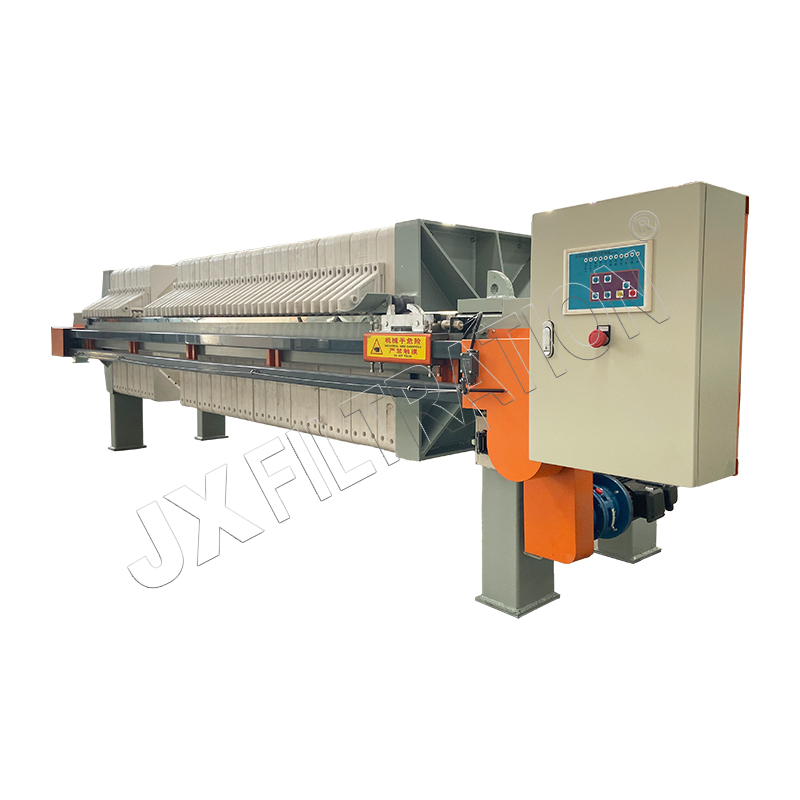
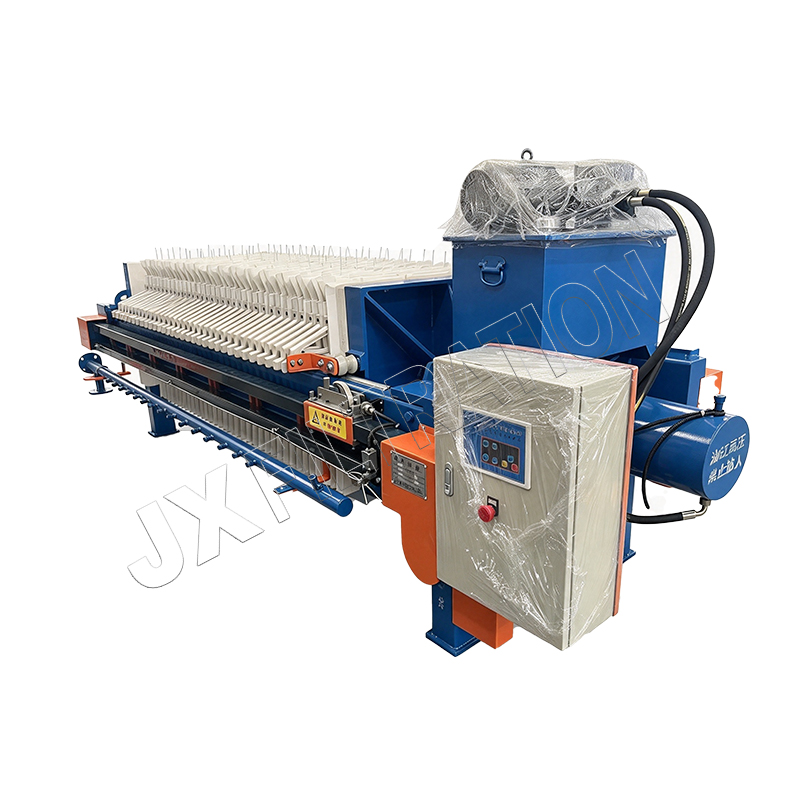
Filter PressFilter PressFilter Press

Working Principle

  • Filling Stage: Slurry is pumped into the chambers formed between the filter plates. Filter cloth lines each chamber, retaining solid particles while filtrate passes through and exits via drainage channels.
  • Filtration & Cake Formation: As slurry continues to fill the chambers under pump pressure (typically 0.5–1.6 MPa), solids accumulate on the cloth surface forming a cake. Continued feed pressure compacts the cake and forces out additional moisture.
  • Membrane Squeeze (Diaphragm Models): For diaphragm filter presses, each plate is equipped with a flexible elastomeric membrane. After initial filling, compressed air, gas, or water inflates the membrane, applying secondary mechanical pressure directly onto the cake surface. This forces out residual moisture that conventional pressure alone cannot remove, producing a much drier final product.
  • Discharge: Once filtration is complete, the hydraulic system releases the closing pressure, plates are separated, and the cake is discharged by gravity or scraper. The filter cloth is then cleaned for the next cycle.

Advantages

  • Superior cake dryness – Delivers 60–70% solids by weight, sometimes higher; diaphragm models achieve even drier cakes than conventional filter presses
  • Clear filtrate – Produces low-TSS filtrate, often below 50 mg/L without additional polishing
  • Heavy-duty construction – Built with heavy-duty steel frames, corrosion-resistant polypropylene plates, and wear-resistant feed pipes for abrasive and corrosive slurries
  • Flexible plate configurations – Plate sizes from 400 mm to 2000 mm, with recessed-chamber and membrane plate options
  • Multiple automation levels – Manual, semi-automatic, or fully automatic hydraulic systems to match operational preferences
  • High mechanical strength – Diaphragm plates manufactured from high-quality polypropylene with reinforced structures, ensuring excellent chemical resistance and durability
  • Customizable filtration parameters – Plate size and number, chamber volume, diaphragm material, cloth type, hydraulic pressure range, and automation level all tailored to throughput and cake dryness targets
  • Low operating cost per tonne of solids processed – Particularly effective for fine-particle slurries that are difficult to settle by gravity

Application

  • Municipal Wastewater Treatment
  • Chemical & Petrochemical
  • Mining & Metallurgy
  • Food & Beverage
  • Pharmaceutical
  • Paper & Textile
  • Hazardous & Oily Sludge
  • Emergency & Decentralized Treatment

Materials & Connection Types

Frame Material: Heavy-duty steel with anti-corrosion treatment.

Filter Plate Material: High-quality polypropylene (PP), reinforced structure for chemical resistance and mechanical strength.

Diaphragm Material: Flexible elastomeric membrane engineered to withstand repeated flexing cycles.

Filter Cloth Material: Polyester, polypropylene, nylon, and other materials selected to match specific ore type, particle size distribution, and chemical compatibility.

Feed Pipe Material: Wear-resistant construction for abrasive slurries.

Control System: PLC with touch panel interface; optional remote monitoring.

Connection Types: Flanged inlet/outlet connections, customizable pipe diameters; complete systems available including pumps, piping, control panels, and cake conveyors.

Key Parameters

ParameterRange
Filtration Area0.16 – 400+ m²
Plate Size400 mm – 2000 mm
Filtering Pressure0.5 – 1.6 MPa
Cake Thickness25 – 40 mm (customizable)
Feeding MethodCenter feed / Corner feed
Hydraulic Station Power2.2 – 7.5 kW

Global Cases

World-wide project track record, continuously creating value for clients
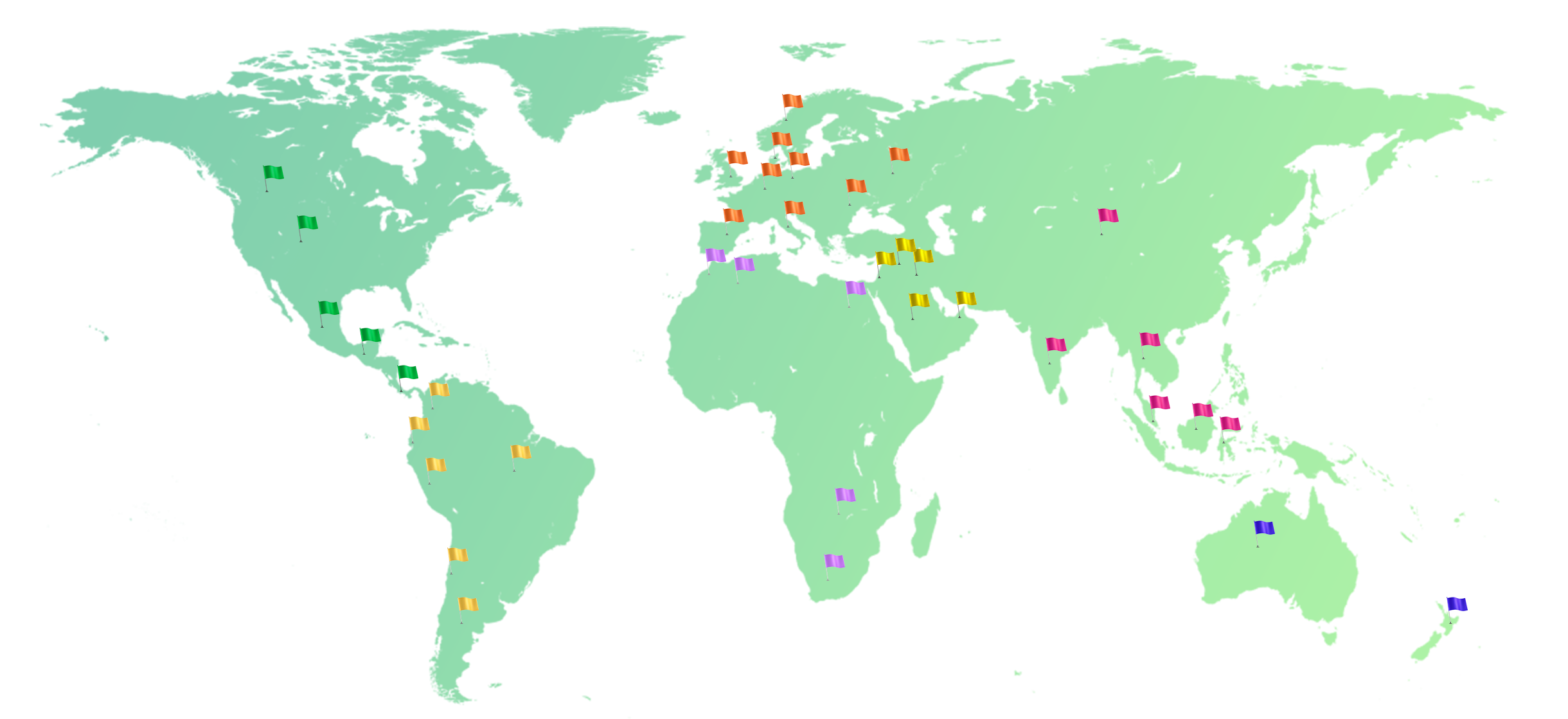
Global Cases Map
Oceania

Oceania

  • AustraliaAustralia
  • New ZealandNew Zealand
South America

South America

  • ChileChile
  • ArgentinaArgentina
  • EcuadorEcuador
  • ColombiaColombia
  • BrazilBrazil
  • PeruPeru
North America

North America

  • USUS
  • CanadaCanada
  • MexicoMexico
  • GuatemalaGuatemala
  • Costa RicaCosta Rica
Europe

Europe

  • NorwayNorway
  • SpainSpain
  • GermanyGermany
  • UKUK
  • PolandPoland
  • RussiaRussia
  • ItalyItaly
  • UkraineUkraine
  • DenmarkDenmark
Asia

Asia

  • IndiaIndia
  • IndonesiaIndonesia
  • MalaysiaMalaysia
  • ThailandThailand
  • MongoliaMongolia
  • SingaporeSingapore
Africa

Africa

  • ZambiaZambia
  • South AfricaSouth Africa
  • EgyptEgypt
  • MoroccoMorocco
  • AlgeriaAlgeria
Middle East

Middle East

  • UAEUAE
  • Saudi ArabiaSaudi Arabia
  • IsraelIsrael
  • SyriaSyria
  • IraqIraq

Contact Us

How can we continuously help you create value?

Follow our social media, we share daily updates

LinkedInFacebookInstagramXYouTube